
I exposed 100 miles of deadly caves underneath St. Paul
Below St. Paul lie miles of caves that America's most famous gangsters used for illicit alcohol distribution during prohibition and now claim the title of the "holy grail" for urban exploration.

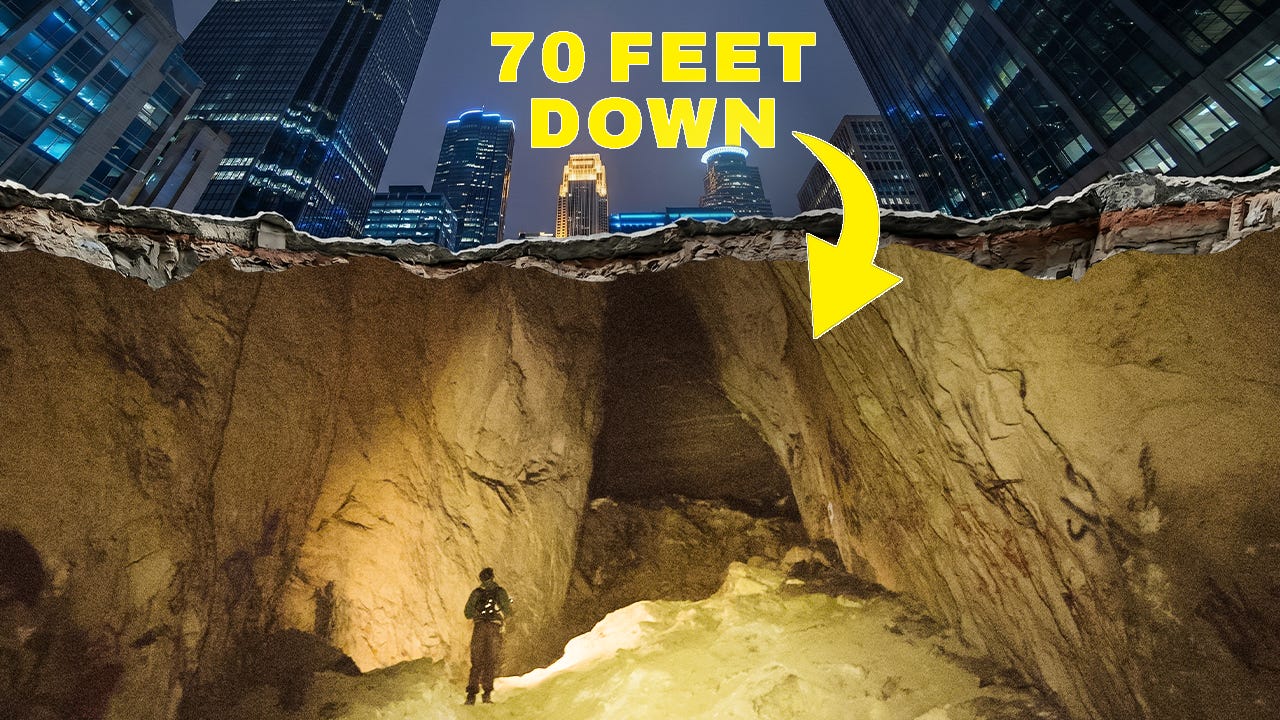
Watch this video here: Exposing 100 miles of deadly caves underneath ST. PAUL
The haters don’t want this video out there.

Which is why I think it’s an important video.
I’m not exactly sure how other people find out about caves, but I learned of the caves underneath St Paul from my older brother, Kyle. He’s 7 years older than me and was online during the same time the group known as Action Squad was actively posting.
actionsquad.org was one of the first blogs that documented detailed urban explorations. This group would find a way into the old Hamms Brewery… or evade a napping security officer to explore the Prohibition caves… or become the first people in a century to access the hundred-mile, 7 layer ‘Labyrinth’ underneath downtown St Paul.
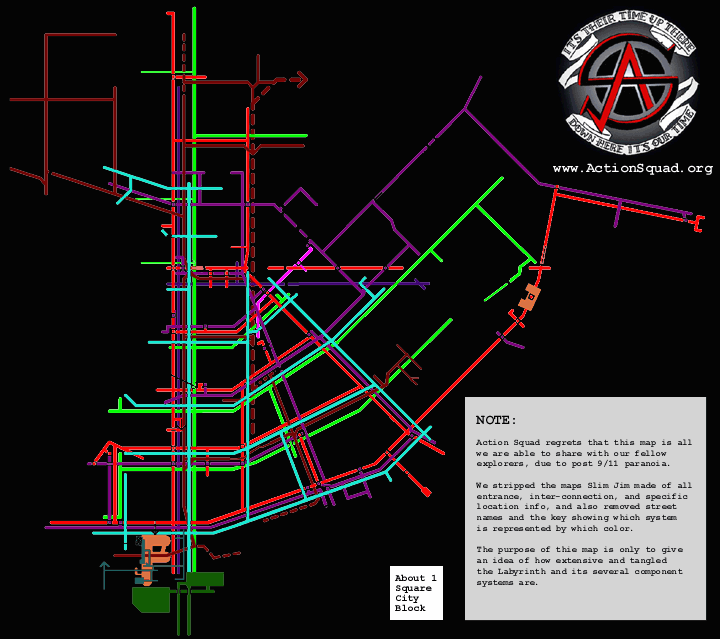
The Labyrinth is what caught my attention. Several urban explorers and geologists wax poetically about this network of tunnels that honeycomb underneath downtown St Paul. It’s unlike any other place in the world and has been described all over the internet as the “holy grail of urban exploration”
So I had to make a video about that.
But that curiosity expanded into WHY it even exists. That can be explained by geology.
The Twin Cities (Minneapolis and St. Paul) sits atop one of the weirdest geological formations of any urban area in the world. There’s literally none other like it.
What makes it unique is a substantial layer of what’s known as St. Peter Sandstone… about 70 feet beneath the ground level.
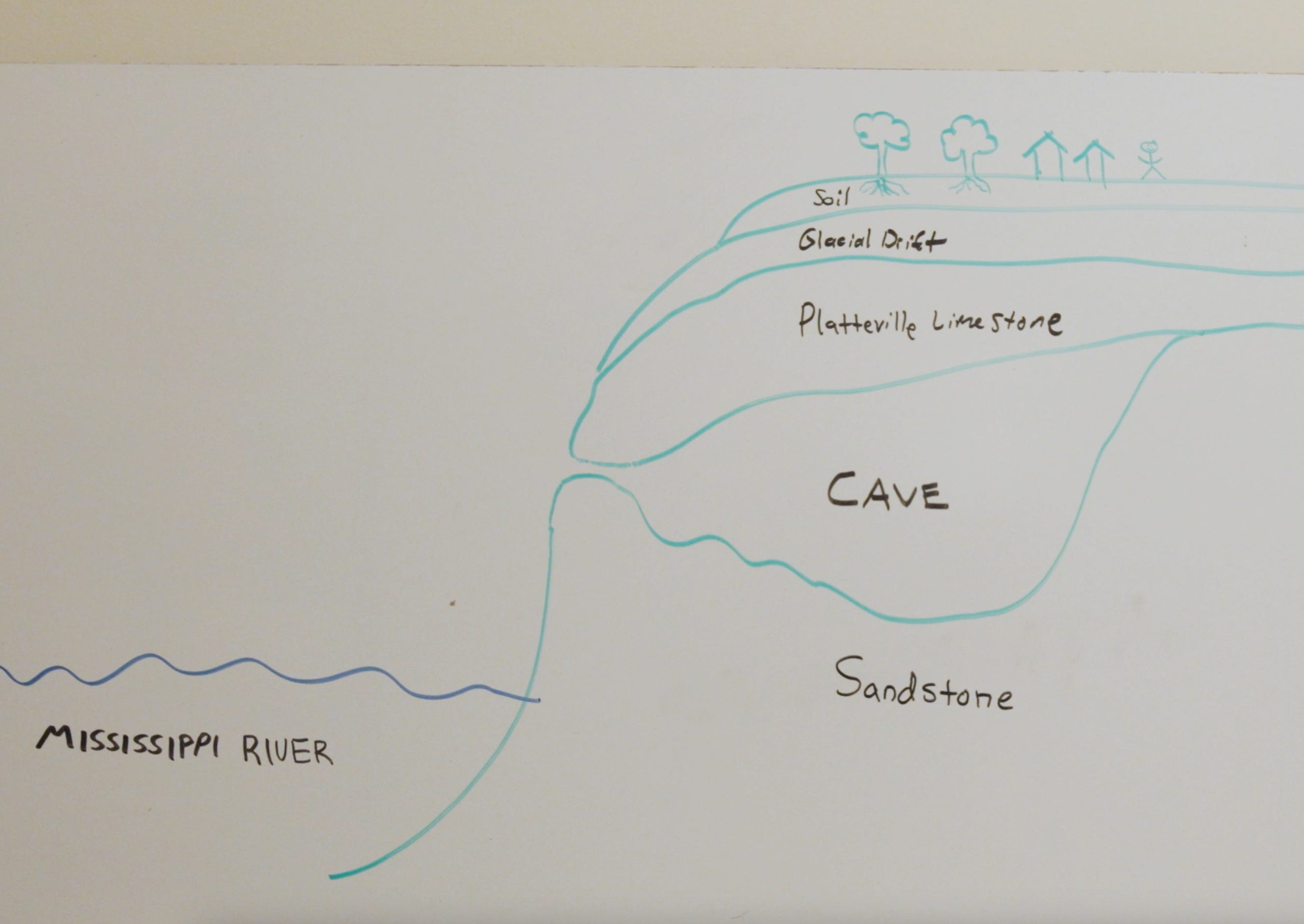
This layer of sandstone can be carved into fairly easily because it is quite literally - just sand. Like compacted sand.
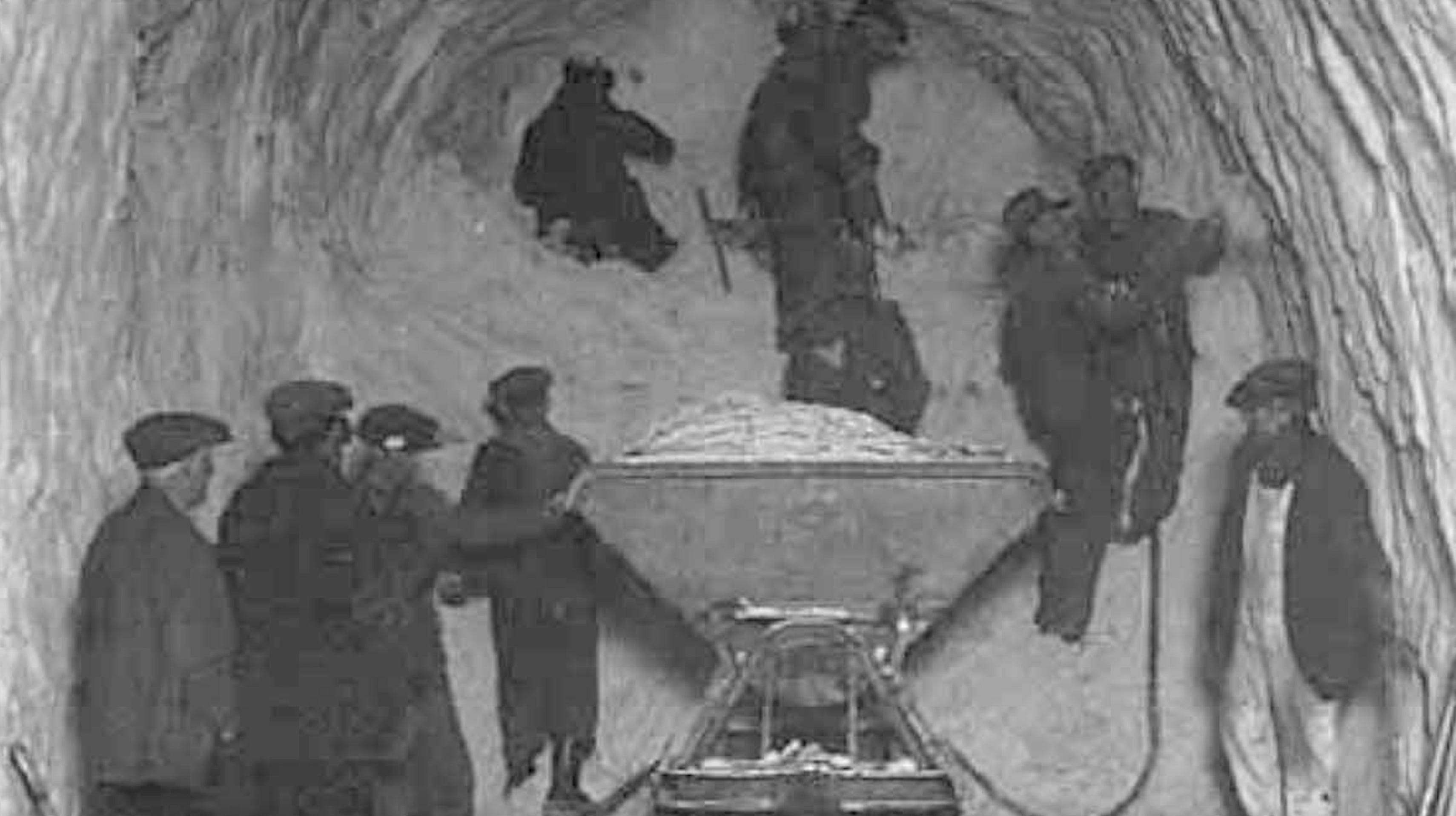
So over a century ago, utility workers carved tunnels all over the city for old telephone lines, gas lines, electric lines, etc etc. But what’s different about this from other cities is that because it was so easy to excavate, they made these tunnels suitable for walking.
There were also commercial uses for carving caves. Just South of the old Ford plant in St Paul, workers excavated sand for use of glass production on their automobiles. This system is large enough to drive a semi-truck through and nearly 50 feet high, stretching for 1.5 miles.
Across the Mississippi River near Lilydale, tens of miles of caves (it’s hard to estimate because they are SO long) were carved and used for mushroom growing.
According to local news, there are over 150 cave entrances in just St Paul alone.
I had to find one of these entrances.
So, I spent hours and late nights deep into reddit threads and youtube comments to get a general idea of where an entrance would be. Then using Google maps, found what I thought looked like an entrance.
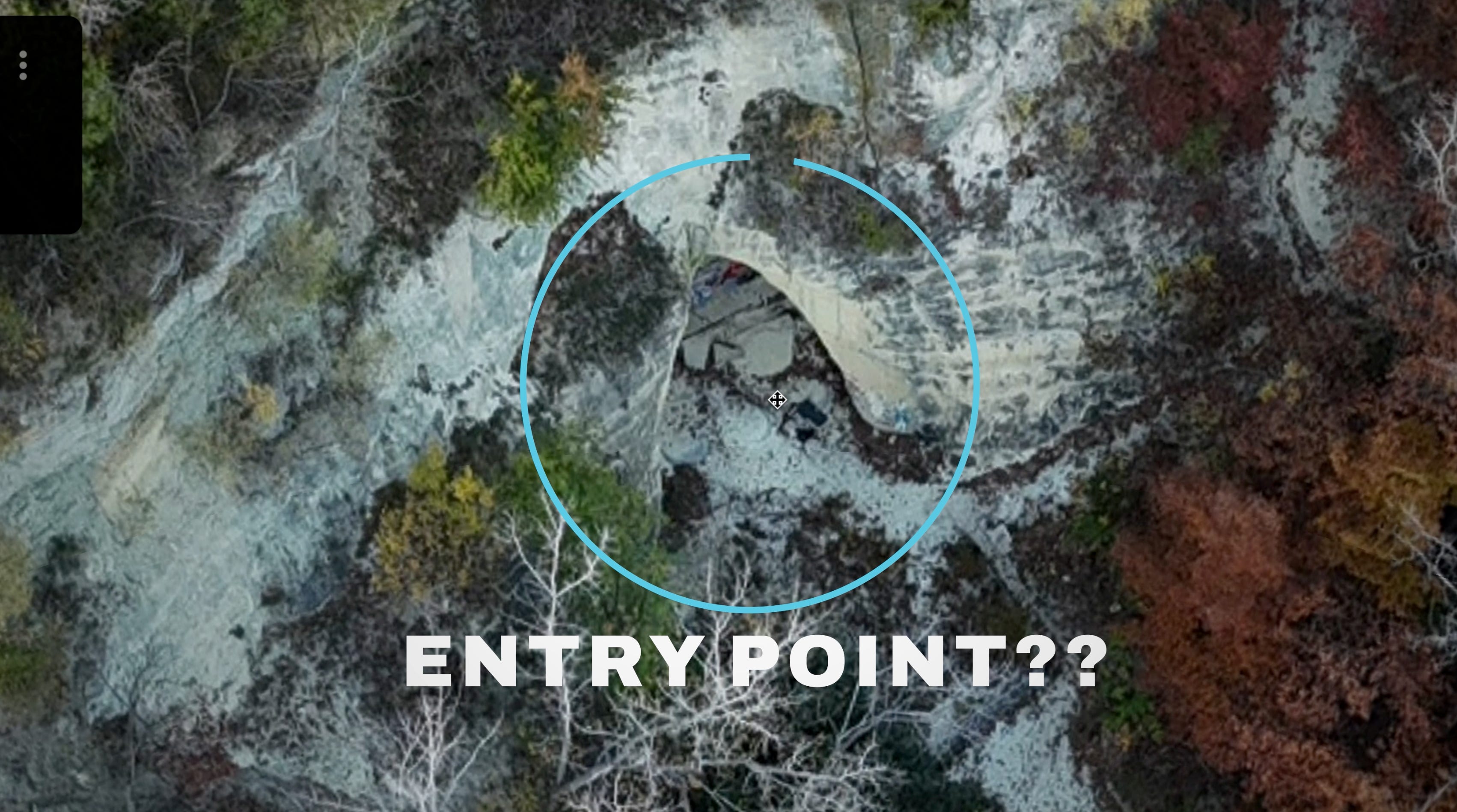
Then, I strapped up cameras to my chest and head, invited my friend Graham because I was scared to go alone, and headed down to what is known as the “Tunnel of Terror.”
Sure enough, what I thought might be an entrance WAS an entrance… but it had a 40 foot wall of concrete blocking it.
So Graham and I followed a heavily trafficked pathway up the sandstone hill next to the large blocked entrance.
And that’s where Graham found a human-sized hole.
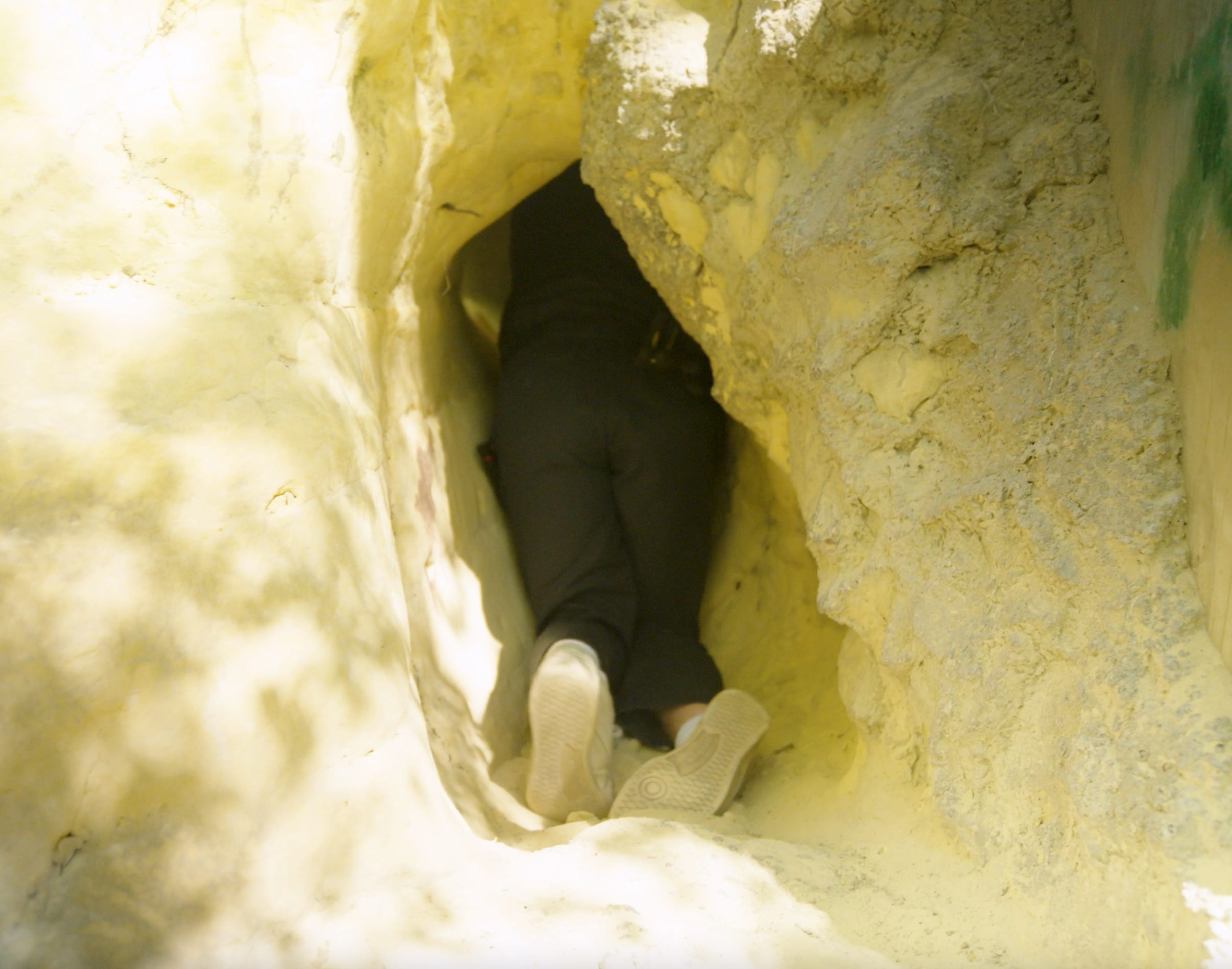
This was kind of overwhelming to find… for many reasons. It was SO easy to find. Who dug this?? How did someone dig this and why?? And, the biggest question, were we about to go inside?
And that’s when Graham started climbing right in.
I actually held him back for a sec so we could get our cameras and CO monitor booted up. Anticipating the dramatic lighting change I wanted to be ready.
THEN we climbed right in. Graham went first, of course.
The hole was about 10 feet long, until it dropped down a few feet and opened up into a huge room.
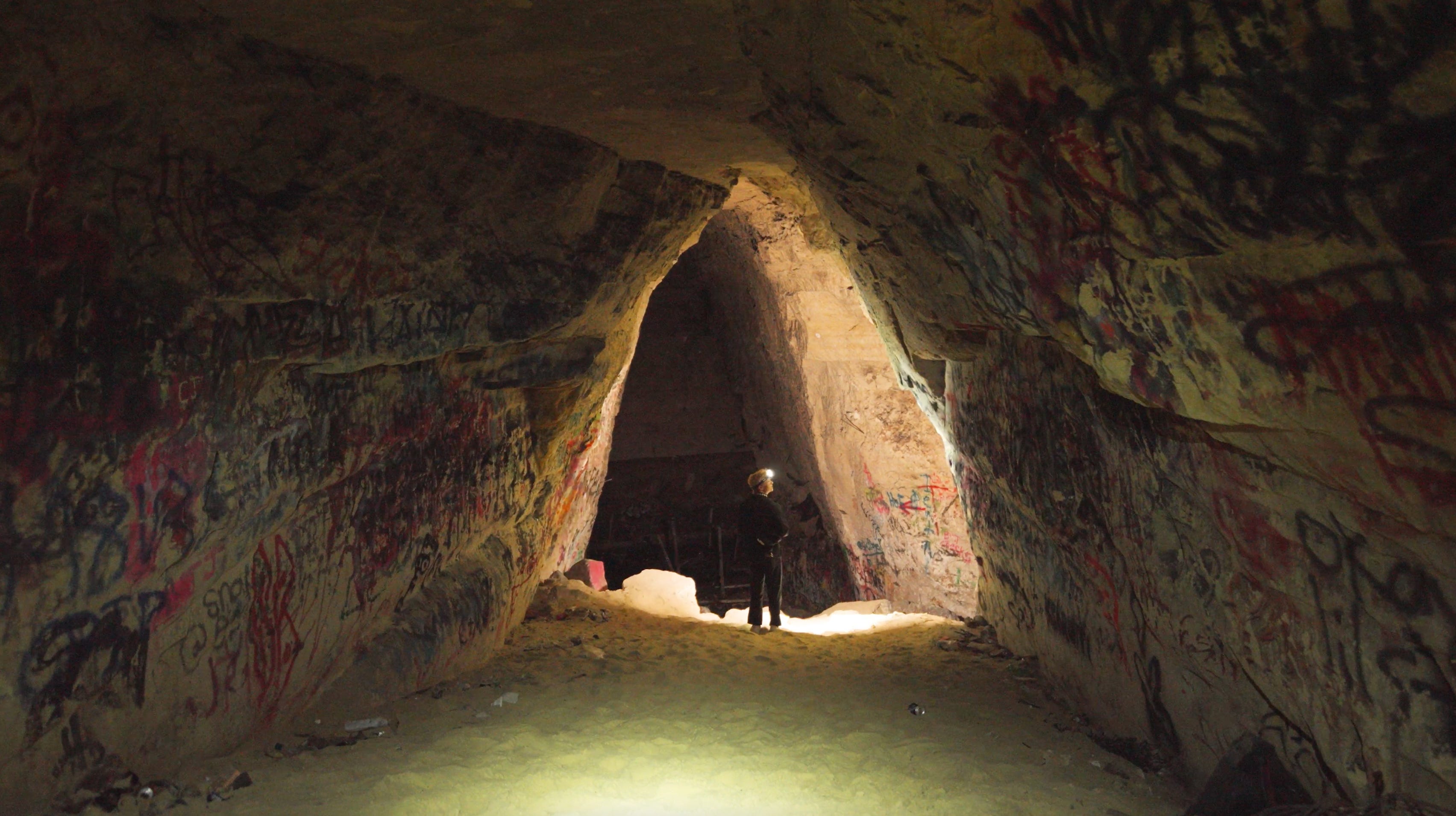
The caving community calls these large openings ‘rooms.’
But what we thought was a room, actually… kept going. And going and going.
Graham and I walked for about a mile or so without encountering an end.
I’d find out later - via local cave enthusiast and geologist Dr. Greg Brick - that this cave system (Tunnel of Terror) is about 1.5 miles long.
Also, according to Dr. Greg Brick, this tunnel system could lead us to the Labyrinth. But that would be a nearly 5 mile journey, likely traveling through sewage and there’s a chance we’d die.
And sadly, there have been several deaths since these caves all got shut down in the 90s and early 2000s.
By my count via publicly available information, at least 11 people have died in the caves from oxygen deprivation, carbon monoxide poisoning, or cave ins.
There have also been countless dramatic rescues.
Having been in the caves, it is extremely disorienting. Everything looks the same. In fact, we saw color-coded yarn that people use to track their return path.
Local news cites dozens of rescues every year. And each of these rescues costs taxpayers thousands of dollars in resources.
Not to mention, in 2004 when 3 teenagers died in the Lilydale caves, the city spent hundreds of thousands of dollars on a consulting firm to help them seal the caves.
But here’s the problem… all of these attempts to seal the caves results in people just carving around the blockages. Because, like mentioned earlier… sandstone is just compacted sand and easily carved out.
So, after speaking with Dr. Greg Brick - the man that has been exploring these caves for nearly 40 years - I learned of the solution.
The city has it all wrong. We shouldn’t close the caves. We should open them up.
In fact, the city already has a perfect use case for this.
The Wabasha Street Caves. This popular tourist attraction, bar and night club embraces the caves to retell the story of the Gangsters in the 1930s that used the caves for illicit alcohol distribution during Prohibition.
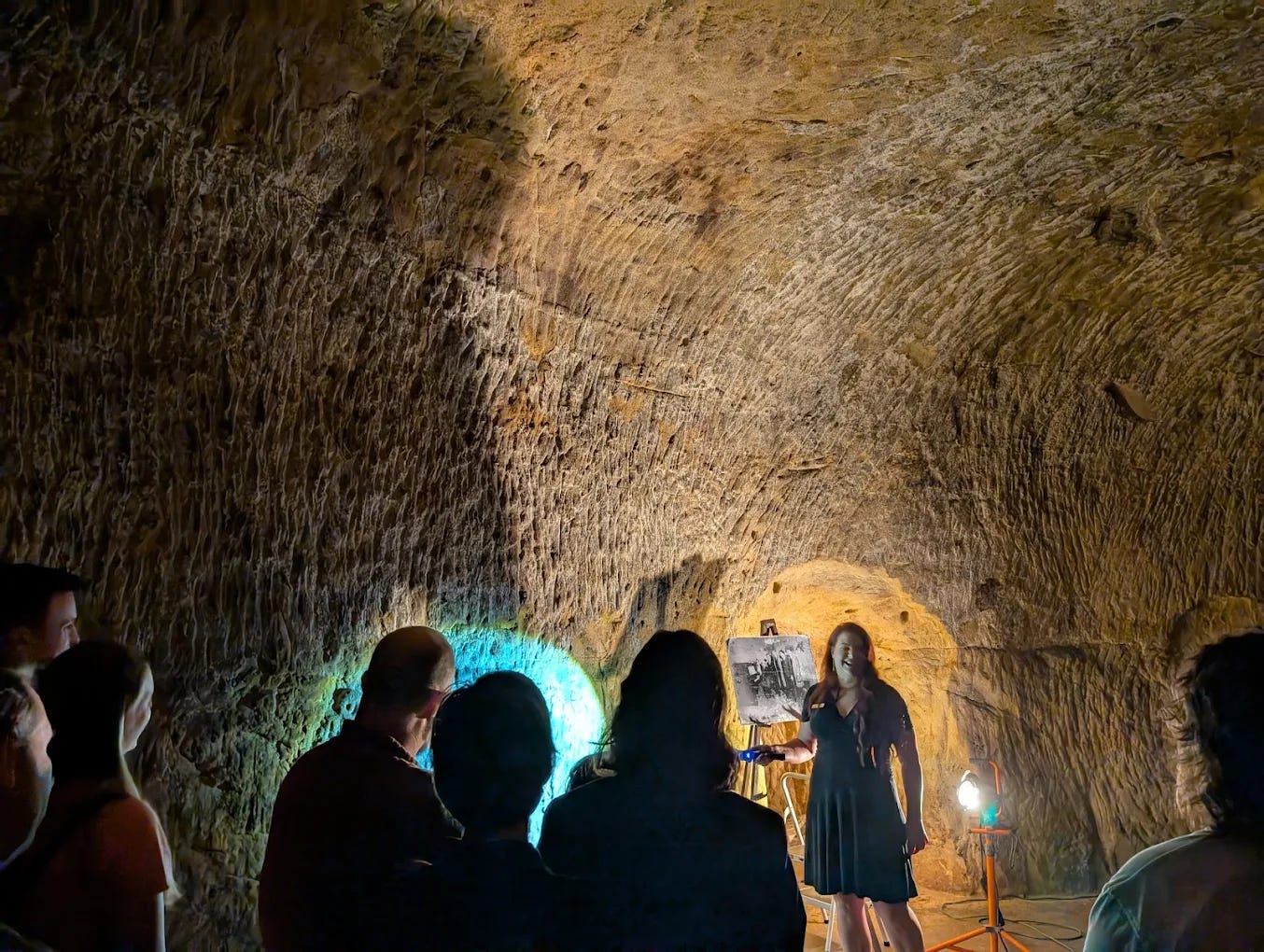
This is when things got kind of weird for me.
The solution seemed pretty obvious: Develop the caves. There’s an incredible amount of space underground that didn’t exist over a hundred years ago that has real-world business application.
I know this because I produced a short documentary about the World’s Largest Underground Business complex in Kansas City, MO… known as Subtropolis.
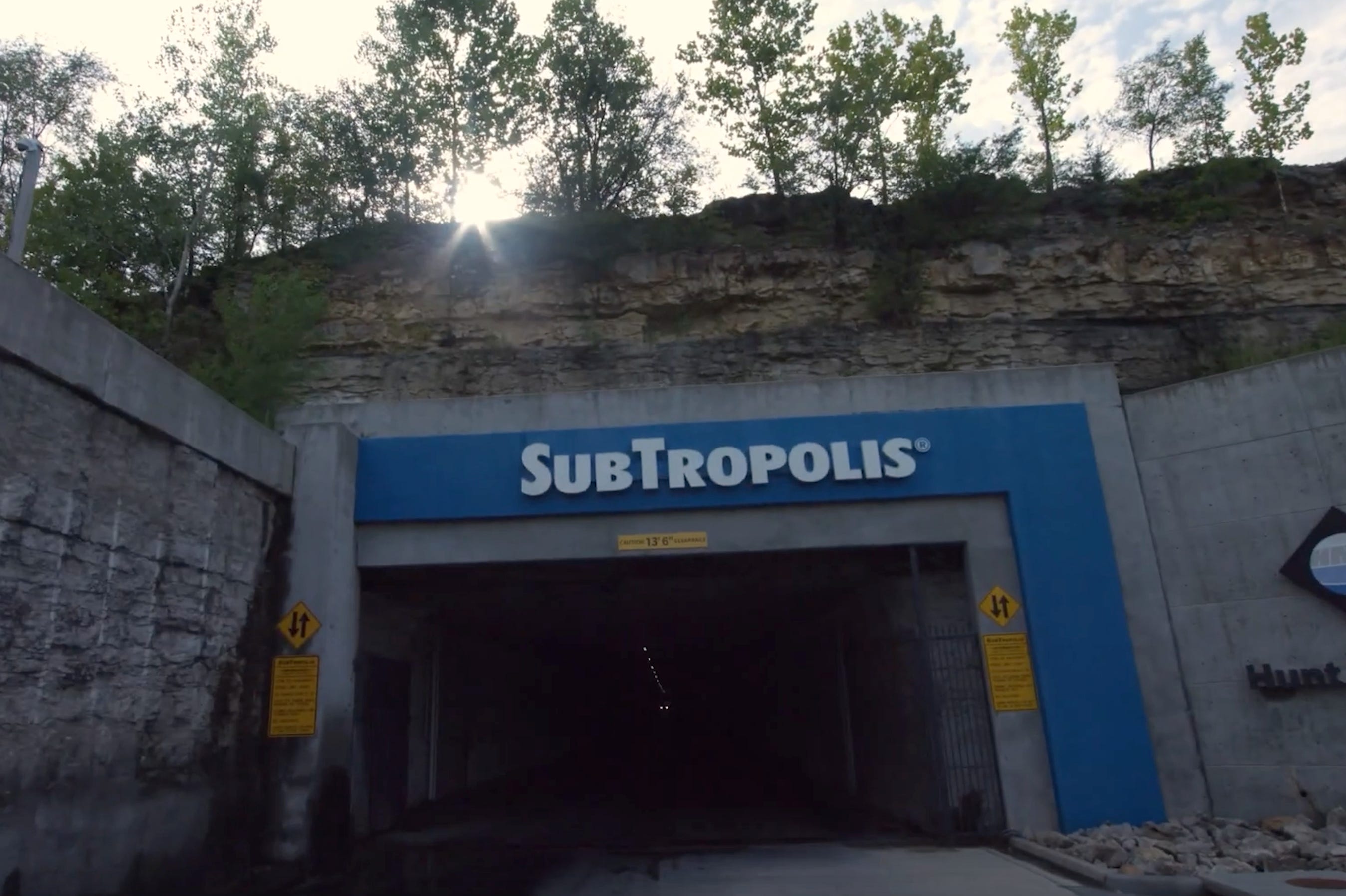
They use their space to rent out to companies for cold food storage, film archival, and (dum dum dum) data centers. The year-round constant temperature, below-ground security, and incredible insulation is a best-case scenario for these companies.
I generally am hesitant to be supportive of commercial development… but in this case, it solves 2 problems at once. It provides real estate that almost nobody wants to the select few that actually value it more, AND prevents the space from explored to the point where people go missing or pass away.
So… because I don’t know any commercial developers and because I’m aware this is an incredibly weird situation… I’m going to try to develop it myself.
I will absolutely post updates here.
Roanoke VA has these and tunnels used for the underground railroad. We also have an underground city from the Manhattan project era.