

The corner store by my house doesn’t have price tags. I think that’s the case for most small corner stores.
So when I need salsa in a pinch (this happens more than I care to admit), I head over to Joe’s Market, the small corner store down the block from where I live. And every time I’m checking out, I get this weird feeling I’m being judged based on what I look like and given a price based on that.
I’ve since come to learn that this is not what’s happening, at least not on a large scale. Turns out, local corner markets like Joe’s Market don’t have the ability to buy in bulk, as their inventory is much smaller than a big box grocer, so they charge 16% higher prices on average, for convenience.
That’s a relief.
Turns out, the problem is a LOT bigger than Joe’s Market…
You know how our Google searches, and the things we like on social media, and where you live, and your hobbies, and your interests all contribute to the ads that you get served? All of that data, and more - a LOT more - is being collected about you every time you use your phone or computer. And even sometimes even when you’re not. All of that information can paint a pretty detailed picture of who you are.
And now, many companies are using that information to serve you a specific price tag that they think you’ll pay. Maybe it’s based on your income. Or your location. Or how desperate you are for a certain product. But it’s likely using all of the information to infer exactly the price you’re likely to pay.
I know this, because I tested it…. against 3 other people: my brother, my best friend and my mom.


First my brother and I ordered the exact same Uber ride. We scheduled the ride for the next day at noon, from Target Field to the airport. And we chose the same Terminal and skipped the airline part. I’m telling you this to emphasize we did the exact same thing.. My price was $52.95.
My brother’s price was $36.95.
His price was 30% lower than mine… for the exact same thing.


I tested a lot of stuff. And many times the prices were the same. But one that interested me was the price of SPAM from the same Target in Roseville.
The price I got served on the instacart app was $4.59.
Kyle, my best friend, got served $4.99.
For the exact same thing.


I posted a short clip of this to comparison to Tiktok and asked people to share their SPAM prices. It has thousands of comments in response. Everyone’s price was different.
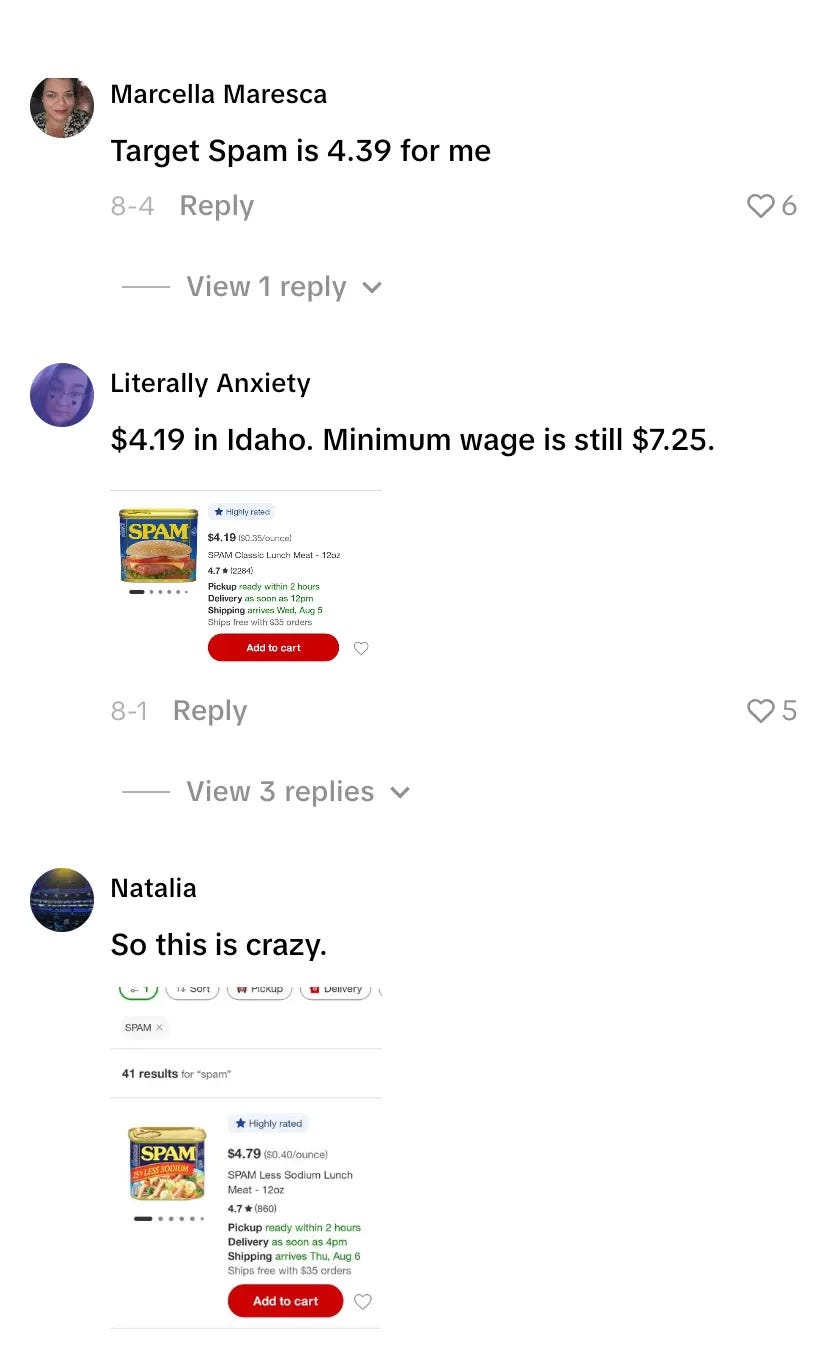
There’s so many reasons this should be illegal. If you can’t compare prices publicly, this removes the essential pressure for companies to compete for fair prices. Which is one of the foundational elements of our economy. Not to mention the inevitable discrimination that will go into setting prices for certain individuals or groups of people.
So, I set out to beat surveillance pricing. My goal was to game the system and feed data that isn’t necessarily true to me, in order to get served a lower price.
Because my data has been collected for 33 years (I’m 33 years old), whatever I was about to do to my data would be a small drop in the bucket compared to the 3 decades of information these companies have collected on me. So, I created a new person. Or… not a new person but a new entity.
Using the Wyoming corporate loophole, I hired a registered agent to create a new LLC in the state of Wyoming. By hiring someone to do this, my name is nowhere to be seen on company documents, essentially masking my new identity. To trick a system I needed a name that sounded like a guy who technically has the cash to buy the store, but whose visible lifestyle and digital footprint guarantees he will never show a high intent to purchase anything.
I named the company - my new identity - Frank Reynolds… LLC.
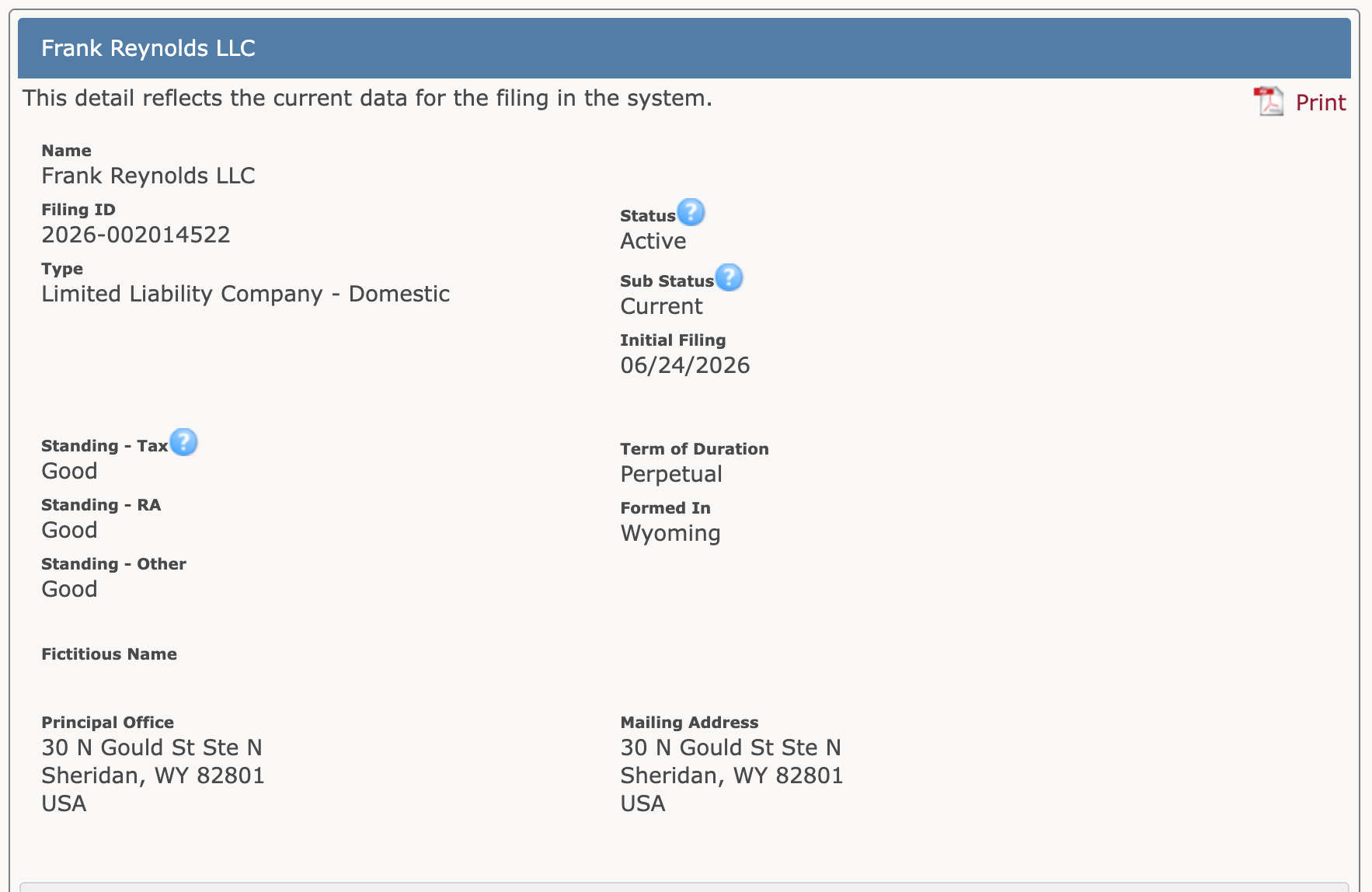
I then used this to get a credit card. With this credit card, I purchased the cheapest possible smartphone I could find. Turns out Walmart sells a Tracfone for $19.99 (this price has since been raised to $29.99 lol).
But I figured I wasn’t necessarily the right person to become Frank Reynolds. I was just a filmmaker… Youtuber…. investigator(?)... what I needed was an actor - to become Frank Reynolds.
So I made a Craigslist post seeking an improv actor to portray someone who has the lowest intent to purchase anything.
That’s when I found Comrade Tripp (that’s his actual name). Comrade is a standup performer and improv actor here in Minneapolis. So I met him in a park parking lot, gave him the Tracfone, credit card and a new email address (frankreynoldsismyactualname@gmail.com… hit me up) to sign up for apps. And one piece of direction: Do whatever it takes to have a low intent to purchase things.
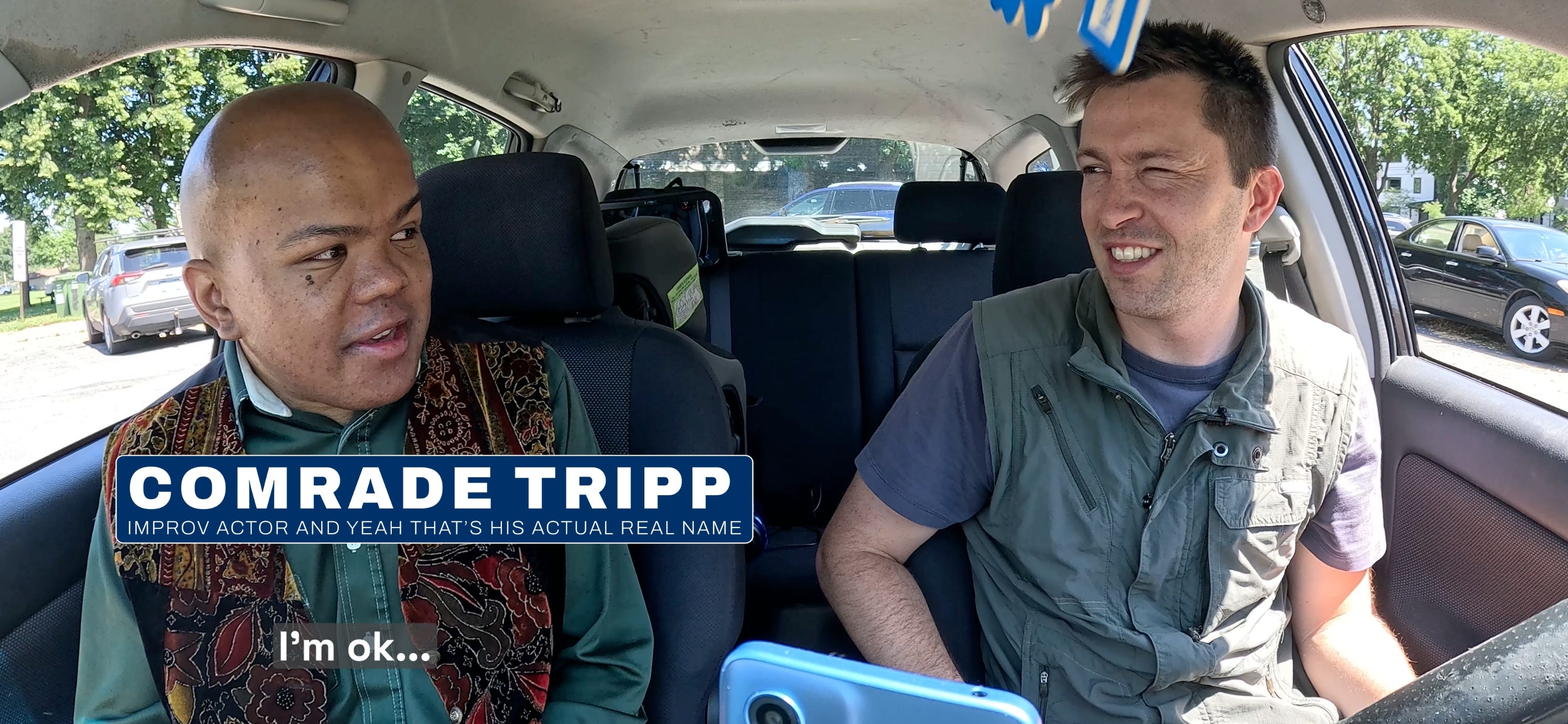
That’s when Comrade became Frank Reynolds. He took the bus to Dinkytown, where all of the University of Minnesota students hang out, signaling to data collectors that he might be low income. I don’t know about you, but I’ve never been more poor and frugal than when I was in college.
Not only that, but he went business to business (Mcdonalds, Starbucks, Great Clips?... Target, etc etc) searching for the cheapest possible thing to buy. He downloaded apps, googled things like “cheapest item at McDonalds,” and over the course of the day, only purchased ONE thing. He just got a banana at Target and gave it to a guy sitting on the sidewalk.
After Frank’s - I mean Comrade’s - escapades, we met back at my car to test if this data manipulation lowered his price. So we went to order the exact same Uber from where we were sitting to Union Depot in St Paul.
My price was $27.95.
The price on Frank’s (Comrade) was $24.95.
Did everything Comrade just did actually work? I have absolutely no idea… but his price was $3 lower.


That’s when I took this experiment to the next level. What Comrade just did likely sent data that signaled he was low income. My thought was… what if someone went from low income to super high income the very next day. As a business, you’d REALLY want this person - who suddenly has disposable income - as a customer. So much so you’d want to give them a discount right away.
But becoming super rich takes a long time and is quite difficult. I think. I don’t actually know, I’m not super rich.
But I knew of a place that ONLY rich people can go. An entire zip code actually.
A few months ago, I made a video about the only private municipality in America. The city of North Oaks, MN was established as an entirely private community. All of the homes, roads, parks, sidewalks, and lakes are privately owned by the people who live there. In order to get into the city, you either need to live there or be an invited guest.
It turns out, this city is also the wealthiest city in Minnesota, per capita.
So if you are inside of North Oaks, there’s a good chance you’re wealthy. So I just had to get in there. Or - I guess not me… but my phone.
So, I attached a phone mount to the bottom of my drone. Then headed to the outskirts of North Oaks. While on the public highway on the border of North Oaks, I used my friend KJ to call my phone, then gave remote access, so we could control the phone while it was in the air. Then, while on the public property outside of North Oaks, launched the drone, then flew it into the public airspace above North Oaks, which is not regulated by the city, but rather by the FAA.
Then using remote access, KJ and I compared prices. We used the Doordash app, which has been called out on reddit for using surveillance pricing tactics to price gauge its customers. We loaded into our carts the exact same thing: a White Castle crave case (30 Original sliders) from the same White Castle a few miles away. Using pickup, not delivery.
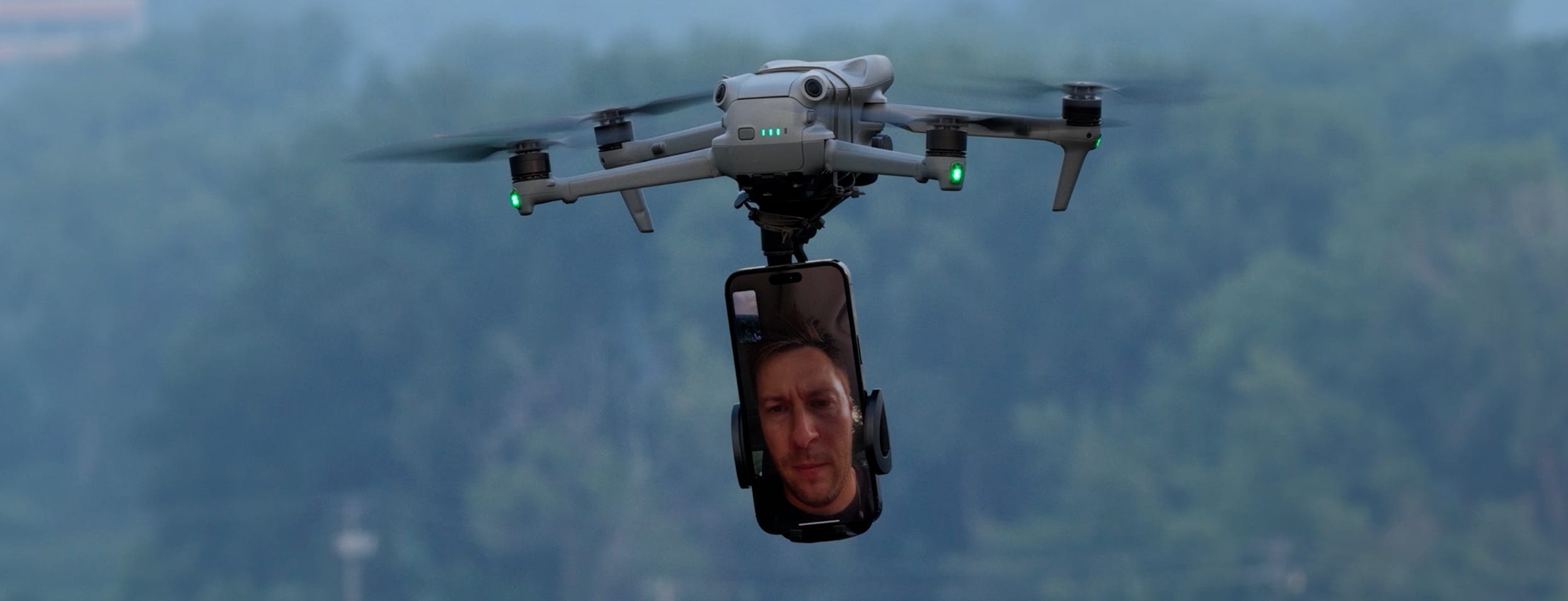
KJ’s price where we were sitting outside of North Oaks was $47.25.
The price from the phone dangling from the drone inside of North Oaks was $39.47.
An almost $8 discount from inside the wealthiest city in Minnesota.


After publishing the full video on Youtube, I also posted a short version of this sequence to instagram.
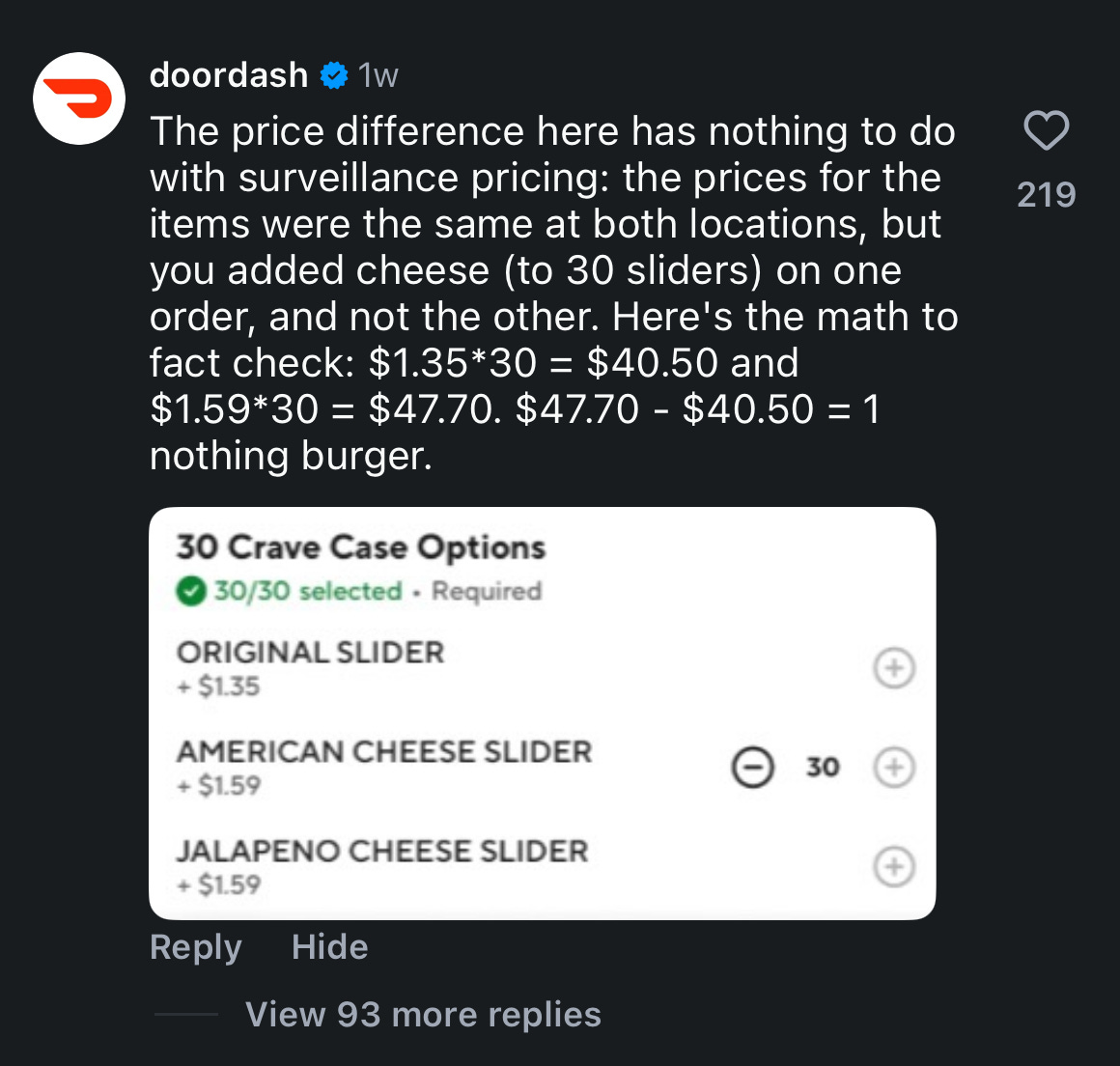
And guess what… Doordash responded! With a confusing comment, claiming that cheese was the price difference (?). But both orders were without cheese.
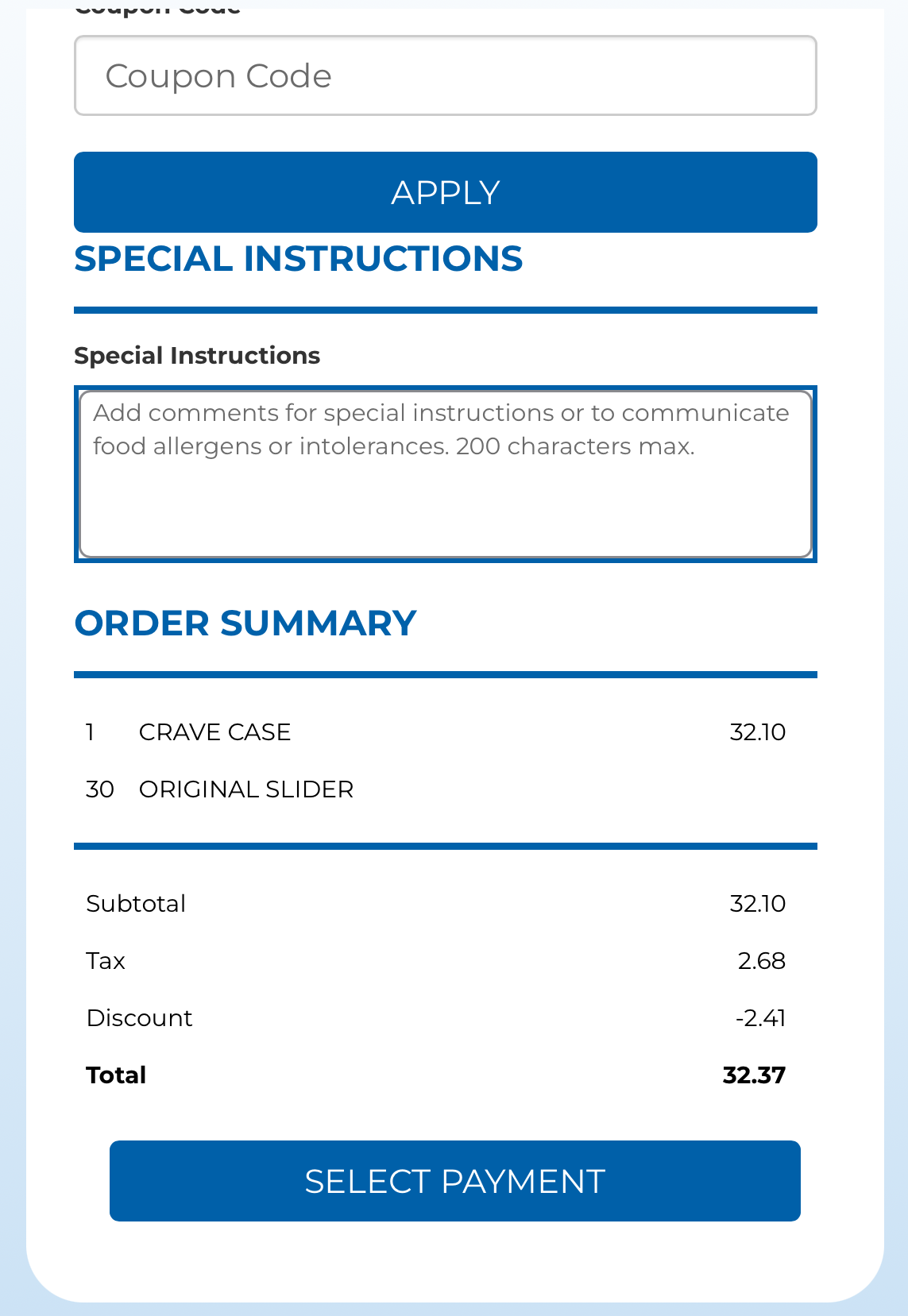
Not only that… but I just went to check the price directly from the White Castle app (cutting out Doordash as the middleman)... and the price was even lower: $32.37.
I have NO idea why this is all happening. And actually I think that’s the point. There are only a few people on the planet that know why this is happening.
But I do know that it’s not fair, it’s wrong, and it will be used against us all.
After publishing all of these videos, I actually had a Minnesota lawmaker reach out to me. We met and talked about surveillance pricing for over an hour. There are many states working on surveillance pricing bans… Minnesota being one of them. The representative I met with worked on a bill that didn’t get enough votes to pass this last year.
Here is a list of all of the Minnesota lawmakers that voted AGAINST a ban, and a way to contact them:
I can't believe DoorDash tried to defend itself. Great read and will be sharing!